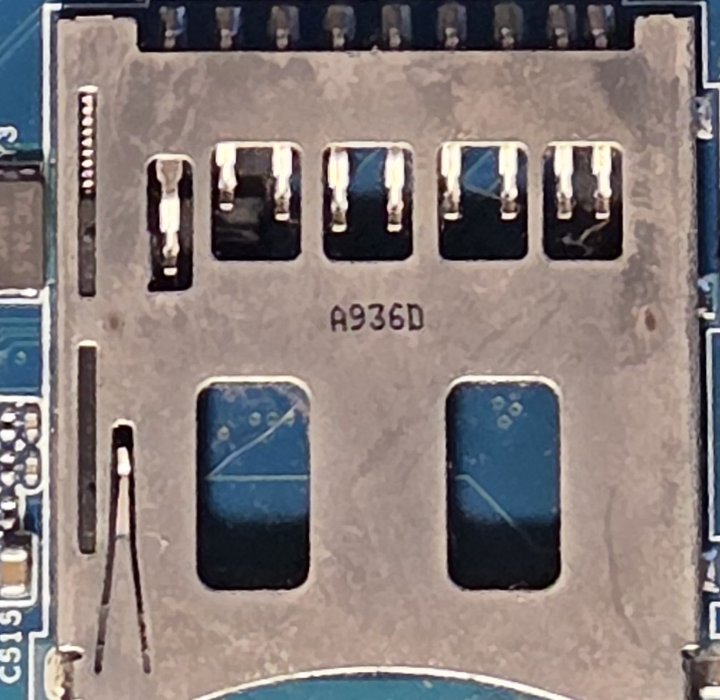
Photo: microscrapping.net
Card sockets — PCMCIA, CF, SD, SIM
PCMCIA and CompactFlash carry the gold; SD, microSD and SIM trays are stainless-and-plastic decoys.
How to spot it
PCMCIA and CardBus sockets are long two-row headers with 68 fine pins plus a metal cage and eject lever, on laptop and industrial boards. CF sockets are shorter, 50-pin. SD sockets are stamped stainless shells with 8–9 flat contacts; microSD and SIM trays are almost entirely stainless and plastic.
Metal content
| Metal | Quantity | Notes |
|---|---|---|
| Gold | 0.8–2.5 g/lb | calculated — PCMCIA 68-pin and CF 50-pin carry 15–30 µin on real contact area; SD and SIM carry flash gold on tiny areas |
| Copper | ~150 g/lb | phosphor bronze and BeCu contacts |
At 4 Aug 2026 spot prices that works out to $197 per lb of contained metal — Gold 1.5 g = $196, Copper 150 g = $1.60. A refiner paying $120 per lb returns about 61% of that, which is normal: refining costs money and the buyer takes a margin.
Safe removal
Working temperature: Hot air 340–370 °C
Hot air at 340–370 °C with a wide nozzle, working the perimeter, supporting the whole socket so contacts don't tear off into the board. Strip the steel cages off and scrap them separately — they badly dilute your gold-grade weight. Snap the plastic and keep only the contact combs for the highest grade.
Hazards
NEVER dry sweep or use compressed air on a scrapping bench. HEPA-vac or wet-wipe only.
NEVER put BeCu in a grinder, a sandblaster, or a melt.
NEVER burn boards, wire insulation or plastic. Ever.
Before you scrap it
The common trap
Questions
How much gold is in card sockets — pcmcia, cf, sd, sim?
Gold: 0.8–2.5 g/lb. Copper: ~150 g/lb. At current spot that is about $197 of contained metal per pound.
How do you identify card sockets — pcmcia, cf, sd, sim?
PCMCIA and CompactFlash carry the gold; SD, microSD and SIM trays are stainless-and-plastic decoys.
How do you remove card sockets — pcmcia, cf, sd, sim safely?
Hot air at 340–370 °C with a wide nozzle, working the perimeter, supporting the whole socket so contacts don't tear off into the board. Strip the steel cages off and scrap them separately — they badly dilute your gold-grade weight. Snap the plastic and keep only the contact combs for the highest grade.
Is card sockets — pcmcia, cf, sd, sim worth more working than as scrap?
Working PCMCIA and CF sockets sell $3–12 each to industrial and retro-laptop repairers, though the population is small and refiner payout on clean contacts is competitive.
Related in Contacts & relays
Get this offline → The full guide runs in your browser with no signal, and you can add your own photos.